

AI for Operations Teams That Need Reliability, Not Theater
Operations teams benefit from AI when it reduces waiting, handoff errors, and search friction in live workflows.
Software systems, AI implementation, and workflow design
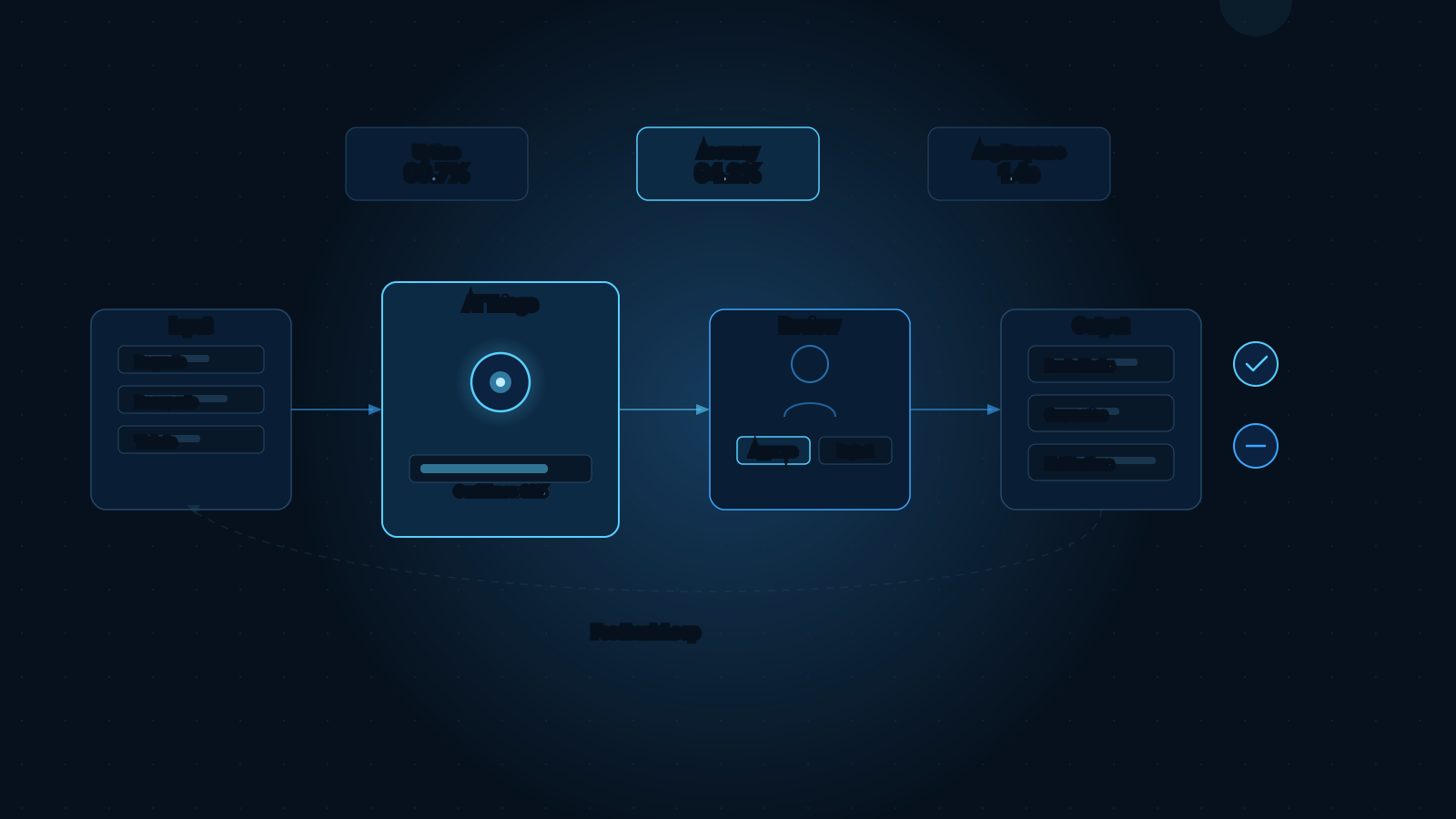
The strongest AI opportunities in operations rarely begin with a public-facing chatbot. They begin inside repetitive, error-prone, or bottlenecked internal work.
When teams lose time to status chasing, document retrieval, manual triage, or repeated first-draft work, AI can improve reliability as much as speed. The design question is not whether AI is impressive. It is whether it reduces operational drag without introducing ambiguity.
That requires workflow analysis, clear human checkpoints, and careful output design. Operations teams need dependable behavior, not novelty. AI that is production-ready should fit existing routines, surface confidence levels where needed, and fail safely when context is incomplete.
The businesses that benefit most are the ones willing to treat AI as part of an operating model rather than an isolated feature. The result is usually a steadier process, fewer avoidable interruptions, and better visibility into how work moves.
AI-Powered Internal Knowledge Assistant
A searchable internal assistant that reduced time spent locating operational answers across fragmented documentation.
- Reduced internal interruptions by half
- Zero retraining required for staff
Workflow Automation for Operations Efficiency
An automation layer that reduced repetitive admin work and made operational handoffs more reliable.
- Handoff errors eliminated
- Consistent process delivery at scale
Continue with adjacent thinking.
Related articles are selected by category alignment first, then by overlapping tags and editorial fit.
AI Integration Beyond Chatbots
The most valuable AI work often happens behind the interface, inside the workflow itself.
AI Agents Are Not the Problem. Deployment Is.
Every major company is racing to deploy AI agents. Most will sit idle within six months. The failure is not technical.
Practical AI Governance for Companies Moving Beyond Experiments
AI governance becomes real when teams need clearer control over data, usage boundaries, review, and operational responsibility.
Contact
If this perspective matches a live delivery problem, email the context and we will respond with a clear next step.
Email info@cylunor.com. We review the context, confirm fit, and respond within one business day with either follow-up questions or a clear next step.