

When to Modernize Legacy Workflows
Modernization is most effective when it solves current friction without creating unnecessary disruption.
Modernization strategy, systems audits, and technical roadmaps
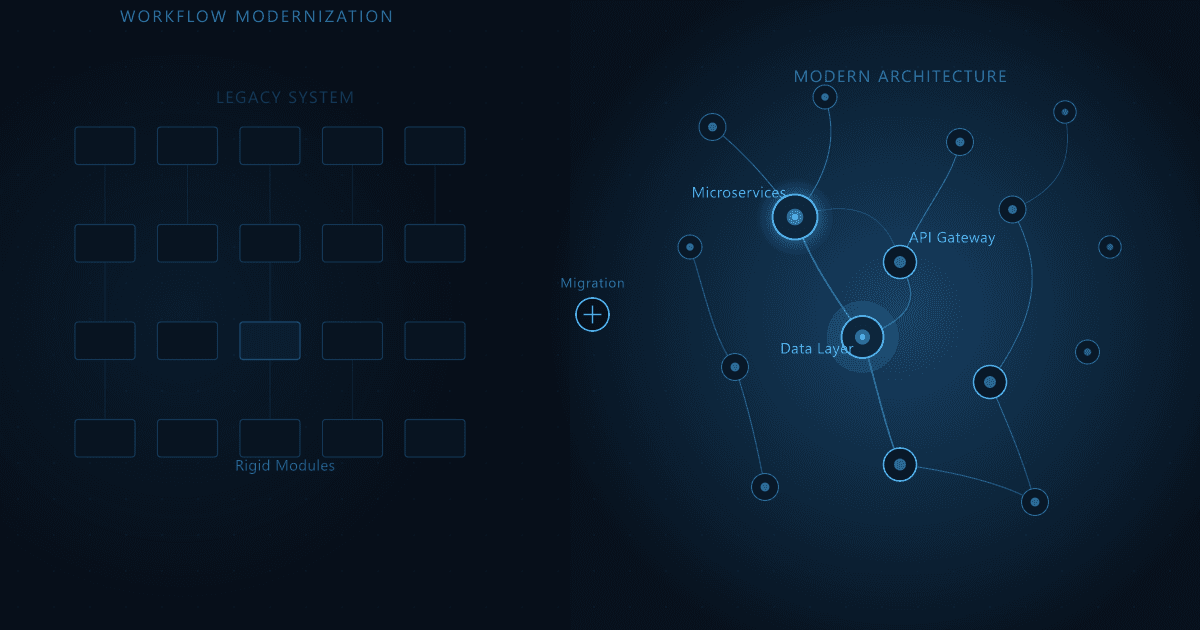
Legacy workflows are not always a problem because they are old. They become a problem when they slow down decisions, create operational uncertainty, or make change too expensive. The age of a system matters less than the amount of friction it creates.
Businesses often delay modernization because they fear disruption. That concern is valid. Replacing systems without a clear plan can create new risks. The solution is not to avoid modernization entirely, but to structure it in a way that targets the highest-value pain points first.
The most useful framing for modernization is not replacement but improvement. Replacing systems creates risk. Improving systems, when done deliberately, can deliver value incrementally while keeping operations running. Many successful modernization efforts follow this model: identify the highest-friction components, address them in sequence, and use each improvement as a foundation for the next.
A good modernization effort begins with visibility. Teams need to understand which parts of the process are stable, which parts are causing repeated friction, and where coordination is breaking down. Without that picture, modernization becomes guesswork.
Technical debt is the accumulation of past decisions that made sense at the time but now create friction. Every system carries some. The challenge is knowing when the debt has reached a level where it actively slows delivery or creates meaningful risk. Indicators include frequent workarounds, reluctance to touch certain parts of the codebase, long onboarding times for new team members, and outages that trace back to old assumptions no longer holding.
It is also important to define what success looks like. Better speed, lower manual effort, clearer accountability, improved reporting, or stronger maintainability are all reasonable goals. The right roadmap depends on which of those outcomes matter most to the business.
Stakeholder alignment is often the most underestimated challenge in modernization. Technical teams see the friction clearly. Business teams see the risk and cost of change. Finding the right framing - one that connects modernization to business outcomes rather than technical preferences - is essential for securing buy-in and maintaining momentum through a multi-month program.
The business case for modernization is often framed in cost terms. But some of the most important returns are strategic rather than operational. Systems that can be changed quickly give businesses more ability to respond to market shifts. Systems that surface reliable data improve decision quality. These benefits are harder to quantify but often more valuable in the long run.
Modernization works best when it is deliberate, staged, and tied to business value. It is not a one-time event but an ongoing discipline. Building a culture of incremental improvement - where legacy is addressed continuously rather than in occasional high-risk rewrites - produces more sustainable results for most organizations.
Continue with adjacent thinking.
Related articles are selected by category alignment first, then by overlapping tags and editorial fit.
What a Good Technical Audit Should Give Leadership
A good technical audit should reduce decision ambiguity, not just produce a list of engineering complaints.
Automation as a Practical Growth Lever
Automation matters most when it removes drag from work that already creates value.
The Business Case for Workflow Visibility
When teams cannot see where work stands, decisions slow down, errors repeat, and coordination becomes the bottleneck instead of the work itself.
Contact
If this perspective matches a live delivery problem, email the context and we will respond with a clear next step.
Email info@cylunor.com. We review the context, confirm fit, and respond within one business day with either follow-up questions or a clear next step.