

Automation as a Practical Growth Lever
Automation matters most when it removes drag from work that already creates value.
Workflow automation, operating systems, and process design
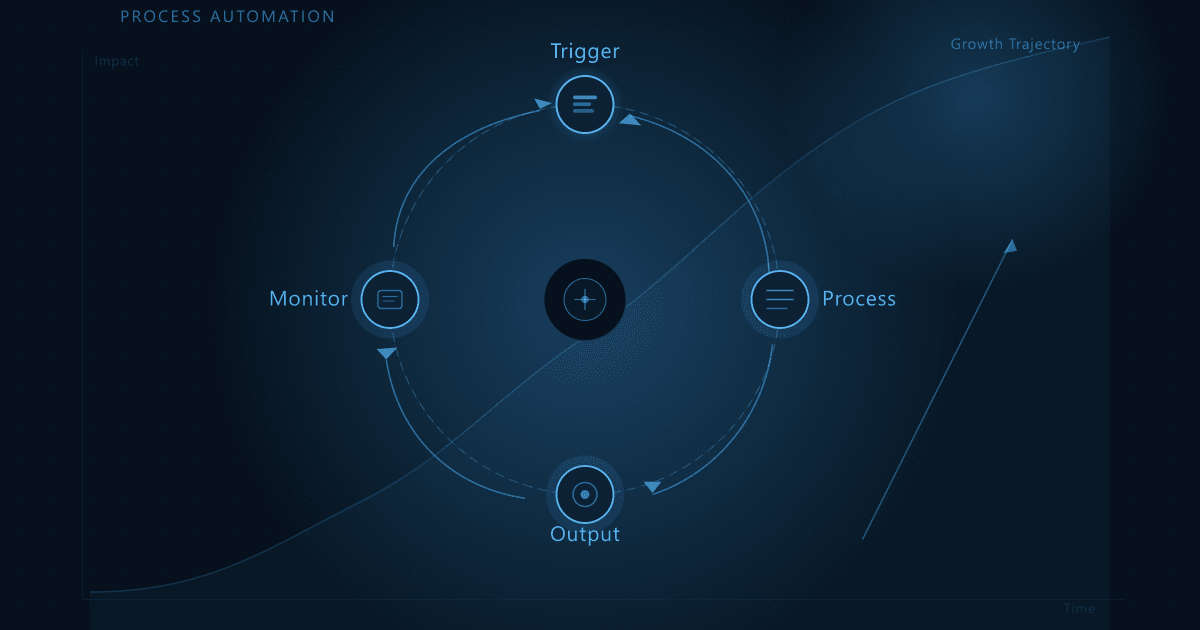
Automation is often framed as a way to save time, but that description is too narrow. Time savings are useful, yet the bigger value often comes from consistency, reliability, and the ability to scale operations without multiplying manual coordination.
In growing businesses, friction rarely comes from one large breakdown. It comes from repeated small interruptions. Manual copying, status chasing, missed updates, delayed handoffs, and inconsistent follow-through all create compound overhead. Automation reduces that drag by making routine work more dependable.
The most effective automation efforts begin with process understanding. Teams need to know what work repeats, where bottlenecks occur, and which steps actually deserve automation. Automating a weak process without clarifying it first usually creates more confusion, not less.
Identifying the right targets for automation is a skill in itself. The best candidates share a few characteristics: they happen frequently, they follow a consistent pattern, they require little contextual judgment, and the cost of an error is manageable. When those conditions apply, automation can remove meaningful operational drag without introducing fragility.
The build versus buy question is an important early decision. Some automation needs are well served by existing tools - scheduling, notifications, basic data movement. Others require custom logic that reflects how a specific business actually operates. Using a generic tool to approximate custom behavior often creates workarounds that become harder to maintain over time.
Change management is consistently underestimated in automation projects. Teams that have handled tasks manually for years develop habits, informal checks, and workarounds that are often invisible in process documentation. When automation replaces those tasks, the informal logic has to be captured and either replicated or explicitly discarded. Skipping this step often results in automation that is technically correct but misses real-world edge cases.
Monitoring is not optional. Automated processes can fail silently in ways that are harder to detect than manual failures. Building in alerting, logging, and periodic review cycles makes it possible to catch degradation early. A well-monitored automation layer builds confidence. An unmonitored one builds technical debt and eventual surprises.
A good automation layer should feel quiet. It should support people without forcing them into unnecessary complexity. Notifications should arrive when they are useful. Handoffs should be clear. Data should move with less effort. Teams should feel the process becoming lighter, not more rigid.
That is why automation should be seen as a growth lever. It does not only reduce repetitive effort. It increases operational trust, which allows teams to scale activity with less overhead - and that trust compounds as the business grows.
Continue with adjacent thinking.
Related articles are selected by category alignment first, then by overlapping tags and editorial fit.
The Business Case for Workflow Visibility
When teams cannot see where work stands, decisions slow down, errors repeat, and coordination becomes the bottleneck instead of the work itself.
When to Modernize Legacy Workflows
Modernization is most effective when it solves current friction without creating unnecessary disruption.
What a Good Technical Audit Should Give Leadership
A good technical audit should reduce decision ambiguity, not just produce a list of engineering complaints.
Contact
If this perspective matches a live delivery problem, email the context and we will respond with a clear next step.
Email info@cylunor.com. We review the context, confirm fit, and respond within one business day with either follow-up questions or a clear next step.